



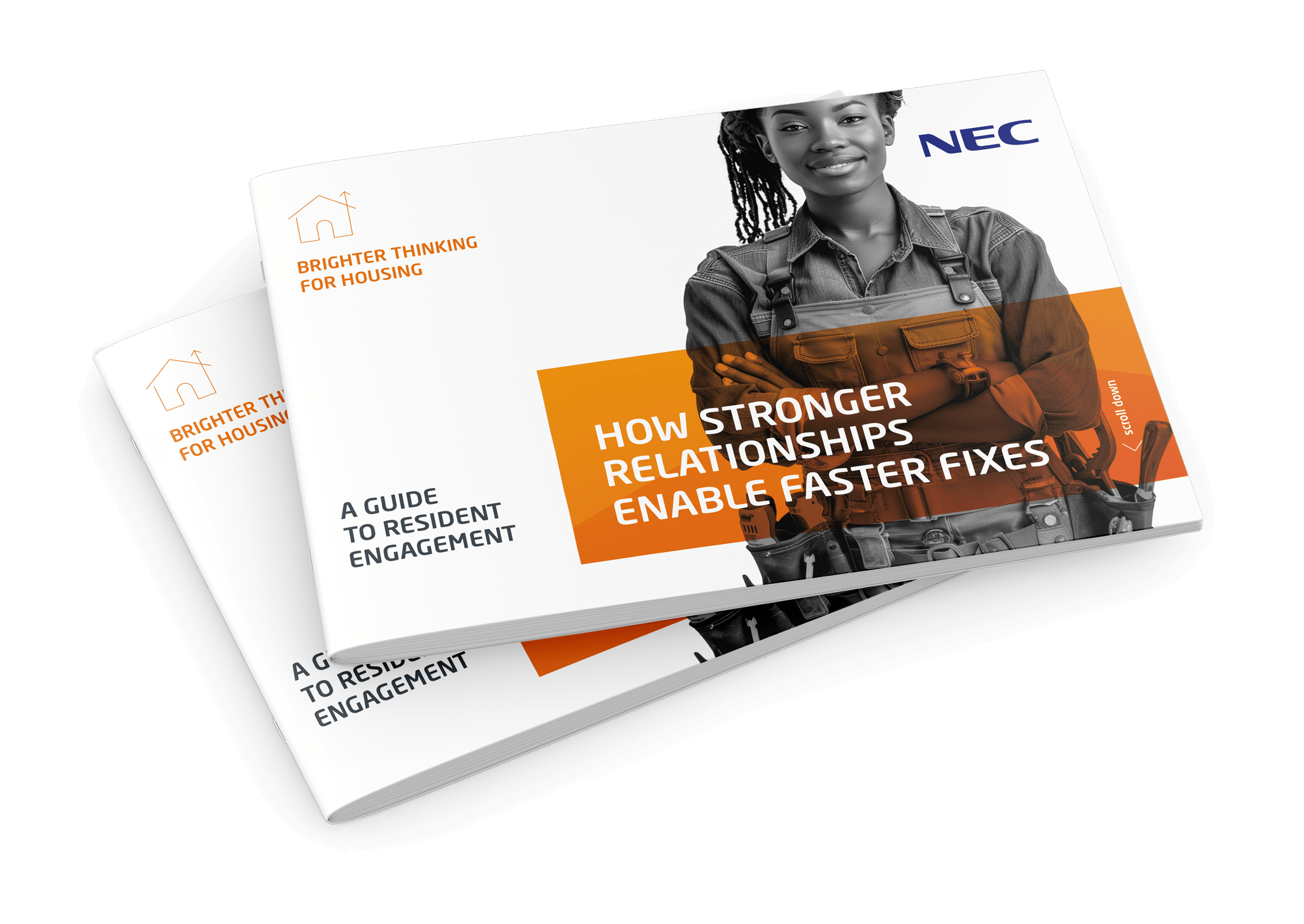
A guide to resident engagement: how stronger relationships enable faster fixes
Responding quickly and effectively to residents’ needs is essential for meeting regulatory standards and improving satisfaction, requiring accurate reporting and strong communication. This guide explores regulatory changes, key drivers of tenant satisfaction, and practical techniques to improve efficiency, reduce pressure, and strengthen relationships ahead of upcoming requirements.
Resident engagement has never mattered more. With increasing regulatory focus and rising expectations, housing providers are under pressure to demonstrate not just performance but trust, responsiveness and transparency.
Why engagement is critical now
The link between service delivery and resident satisfaction is clear – particularly when it comes to repairs and complaint handling. But engagement goes deeper than operational performance. It shapes how residents feel about their landlord, their home and the services they receive. The challenge for providers is delivering this at scale, without adding pressure to already stretched teams.
Understanding what drives satisfaction
Improving engagement means looking beyond isolated metrics and taking a more holistic view. In our guide, we highlight the 3 Ps of tenant experience:
- The Practical – what gets done (e.g. repairs, safety, services)
- The Personal – whether residents feel in control and informed
- The Perceptive – whether they believe their voice is heard
When these elements work together, organisations can not only improve satisfaction – but also unlock operational efficiencies and stronger tenant relationships.
From engagement to operational impact
Stronger relationships don’t just benefit residents – they directly improve organisational performance. Engaged residents are more likely to provide the right information first time, engage earlier when issues arise, and work collaboratively with landlords. This enables faster fixes, fewer repeat visits, and better use of resources, freeing up time for teams to focus where it matters most.
Read the full guide
To learn more about building better relationships with residents, download the full guide, How Stronger Relationships Enable Faster Fixes.
Housing Guide:How Stronger Relationships Enable Faster Fixes