





Awaab’s Law: the biggest risk is not your technology, but the gaps between it
-
Kay Aston ·
- · 9 September 2026 ·
- Articles
Kay Aston, Housing Product Portfolio Director at NEC Housing, argues that the biggest Awaab’s Law compliance risk is not a lack of technology, but fragmented processes, disconnected data and unclear accountability across housing organisations. The article highlights how a connected housing management platform can help providers strengthen governance, improve resident outcomes and turn compliance into an opportunity for better service delivery.
As housing providers prepare for Awaab’s Law, much of the conversation has focused on statutory timescales, but deadlines are only part of the story.
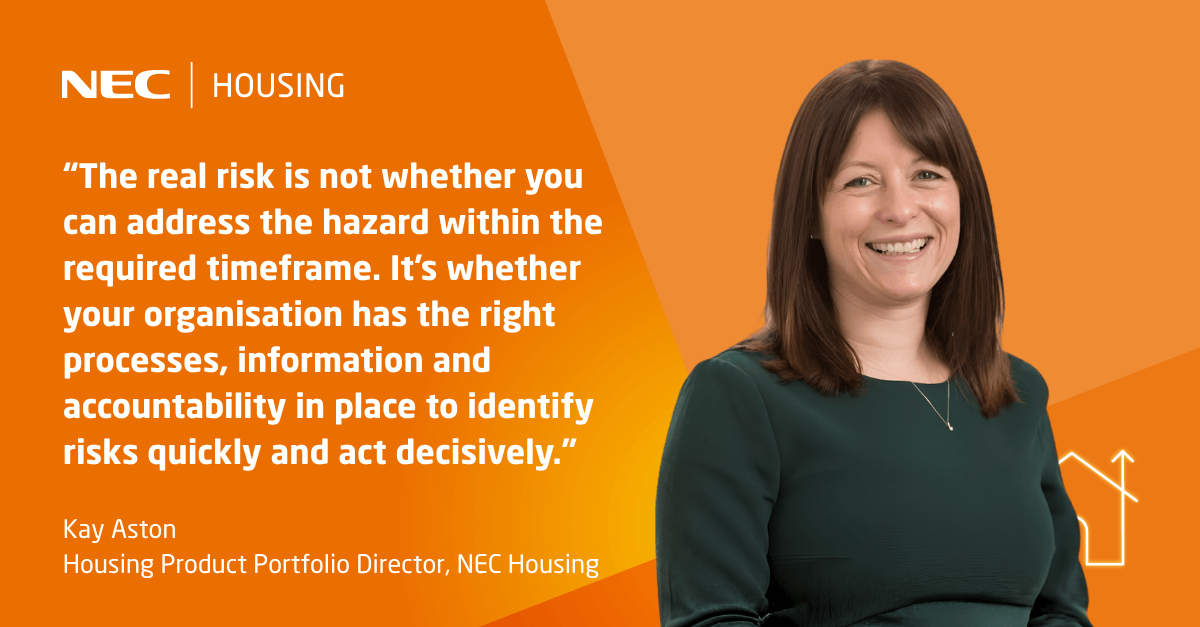
The real risk is not whether you can address the hazard within the required timeframe. It’s whether your organisation has the right processes, information and accountability in place to identify risks quickly and act decisively.
Too often, Awaab’s Law is viewed as a repairs challenge. In reality, it’s an organisational challenge.
One common mistake is treating every hazard the same. It may appear low priority at face value, but for a resident with health conditions or other vulnerabilities, it could represent a serious risk. The urgency isn’t determined solely by the hazard – it’s determined by the impact on the resident.
Another risk is assuming compliance begins when a customer reports an issue. In practice, the countdown starts when the organisation becomes aware of a potential hazard. If a contractor spots an issue during a visit, a housing officer identifies a concern, or a resident raises an issue through another channel, information needs to be captured, shared and acted upon immediately. Delays in reporting can quickly become compliance risks.
Housing providers should also be prepared for rising resident expectations. Public awareness of housing conditions has increased significantly in recent years, and residents rightly expect faster responses and clearer communication. This will place additional pressure on housing teams already managing growing workloads.
The financial implications should not be overlooked either. Compensation payments, legal claims, temporary accommodation costs and additional repair work can quickly exceed the cost of addressing issues proactively. More importantly, failing to act can damage trust, reputation and resident wellbeing.
From our perspective, the biggest strategic risk is not a lack of technology, but fragmented technology.
Many providers are being told they need new systems, specialist platforms or additional suppliers to comply with Awaab’s Law. However, every new system creates another integration, another source of data and another point where accountability can become unclear.
For NEC Housing customers, the capabilities needed to support compliance already exist within the platform. Case management, inspections, repairs fulfilment, workforce scheduling, mobile working, resident engagement and compliance reporting can all be managed through a connected housing management platform.
The focus should therefore be on maximising the value of existing investment rather than adding complexity.
NEC has invested more than £60 million its housing platform in recent years and continues to enhance case management, repairs optimisation, compliance reporting, resident engagement and AI capabilities.
The goal is not only to help providers comply with regulation, but to support a more connected and accountable housing service.
Ultimately, Awaab’s Law should not be viewed as a regulatory burden. It should be seen as an opportunity to strengthen resident outcomes, improve operational performance and build greater confidence in housing services.
The organisations that succeed won’t necessarily be those with the most technology, but those with the clearest processes, the strongest governance, and the best understanding of their residents.