




Awaab’s Law: You may already have the tools you need
-
Kay Aston ·
- · 26 August 2026 ·
- Articles
As phase 2 of Awaab’s Law approaches, many housing providers are reviewing their processes, technology and operational readiness to ensure they can meet the new requirements to address the additional hazards that will need to be managed from the end of November.
One question we’re increasingly hearing from customers is: ‘Do we need a dedicated Awaab’s Law system?’ and the answer is often no.
For NEC Housing customers, the good news is that the capabilities needed to support compliance are already embedded within the solution used every day. Awaab’s Law is not a single process or isolated workflow. It’s about identifying issues quickly, prioritising risk appropriately, coordinating action across multiple teams, maintaining complete records, and demonstrating compliance throughout the process.
These are challenges that housing providers have been managing for years and they are exactly the types of operational processes the NEC Housing platform is designed to support.
Turning regulation into operational readiness
The focus of Awaab’s Law is clear: landlords must respond to reported hazards within defined timescales, take appropriate action, and maintain evidence that issues have been investigated and resolved.
Achieving this requires visibility across case management, repairs, housing management, customer contact, inspections and reporting. NEC Housing already brings these functions together.
While phase 1 of Awaab’s Law focused on damp and mould, phase 2 introduces the requirement to manage more hazards including excess cold, excess heat, falls, structural collapse, fire and explosions, electrical hazards and domestic hygiene.
Knowing about a hazard could come from a number of sources. It could be reported by a resident, identified by a repairs operative, picked up as part of a tenancy visit, or it could have been identified from a stock condition or HHSRS survey. Organisations can log the case, raise an inspection, order repairs if required, prioritise work based on severity, track progress, and maintain a full audit trail through existing NEC Housing workflows. Information is available to housing officers, repairs teams, contact centre staff, managers and contractors, helping ensure everyone is working from the same information.
A key benefit of managing Awaab’s Law end to end with NEC Housing is that you have all information about the property and the resident in one place. So, identifying an excess cold risk and knowing that the resident is elderly with breathing difficulties, or there’s a child with asthma in the property can help to immediately give it the right priority so it can be addressed quickly.
This joined-up approach reduces the risk of issues becoming trapped in departmental silos, one of the key challenges many providers face when managing compliance obligations.
Better visibility of risk
Awaab’s Law is ultimately about protecting residents through faster identification and resolution of hazards. Using NEC Housing, organisations can record and monitor hazards, track outstanding actions, manage inspections, and identify cases that require escalation.
Streamlined workflows and task allocation help ensure important actions are not overlooked, while dashboards and reporting provide managers with visibility of performance and emerging risks. Rather than relying on spreadsheets or manual monitoring, teams can proactively manage cases and intervene before service standards are breached.
For many providers, this visibility is one of the most important elements of compliance. It’s not enough to respond to individual cases. Organisations need confidence that they can identify trends, understand workloads, and monitor performance across their housing stock.
Evidence matters
One of the biggest concerns surrounding Awaab’s Law is demonstrating compliance. Housing providers need clear evidence of what was reported, when action was taken, who was involved, and how the issue was resolved.
NEC Housing solutions support this through comprehensive case records, repair histories, communications logs, inspection records, documents, and reporting capabilities. This creates a clear audit trail throughout the lifecycle of a case.
Should an organisation need to demonstrate that it has met its obligations, the information is readily available within the system rather than being spread across multiple platforms, inboxes or paper files.
Supporting a resident-focused service
Technology alone does not deliver compliance. Successful implementation of Awaab’s Law requires strong processes, clear accountability, and a culture focused on resident outcomes. However, technology plays a critical role in enabling teams to work effectively.
NEC Housing helps organisations streamline communication, coordinate teams, manage work efficiently and maintain accurate records. This allows housing providers to focus on what matters most: resolving issues quickly and improving residents’ living conditions.
With increasing regulatory scrutiny, providers need confidence that they can evidence their actions while delivering a response and consistent customer experience.
Making the most of the capabilities you already have
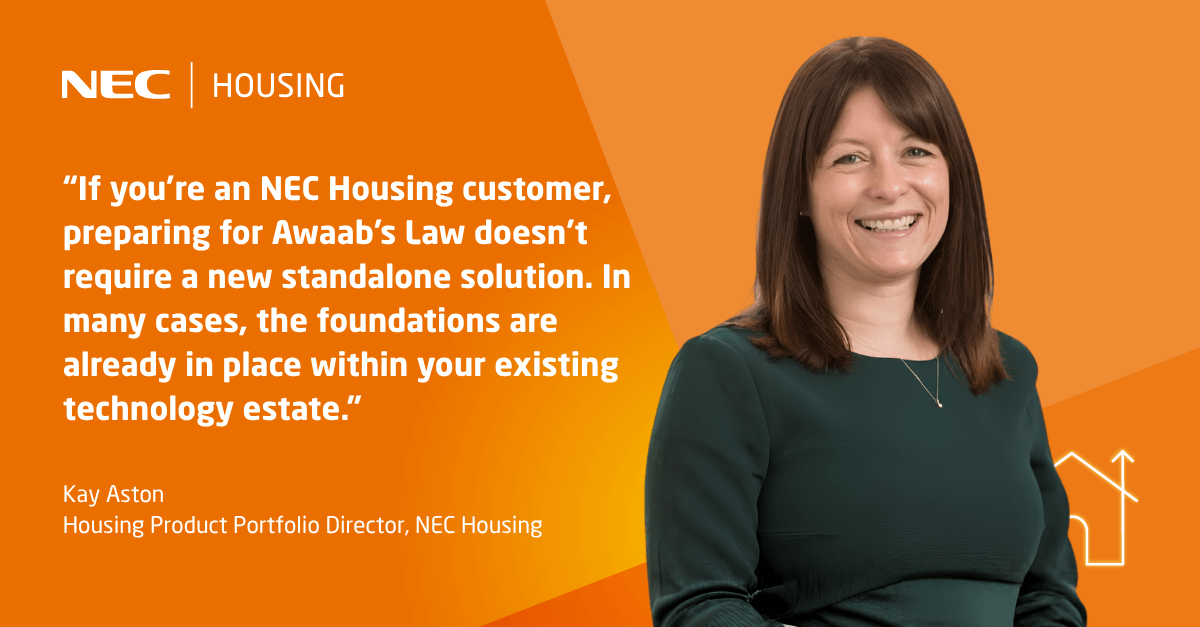
If you’re an NEC Housing customer, preparing for Awaab’s Law doesn’t require a new standalone solution. In many cases, the foundations are already in place within your existing technology estate.
The priority should be understanding how your current processes align with the legislation, reviewing workflows and reporting, and ensuring teams are using available functionality to its full potential.
At NEC Housing, we are working closely with customers to help them assess readiness, share best practice, and maximise the value of the solutions they already use.
Awaab’s Law represents an important step forward for the sector and, with the right processes supported by the right technology, housing providers can respond with confidence while continuing to deliver safe, healthy homes for residents.